how we get started
A Small Step

A physician or a leader hears about eSynchrony, perhaps from a colleague or at a conference. So we start small: a short demo, a meet-and-greet, or a hands-on training session with the physician and a group they choose — a few leaders and staff, for example.
Ask a Peer First

Sometimes the best introduction isn't us at all. We connect a physician or leader with a peer already using eSynchrony — leader to leader, physician to physician — so they can talk directly and explore. We highly encourage this as a starting point.
Time on the Floor

As a champion physician or a specialty comes into focus for a pilot, we go deeper: observing patient flow, talking with the front lines, and understanding wait time challenges and where a tool like eSynchrony might help. This time on-site also shapes the setup itself — how many boards, and where — and often gives frontline staff and local leaders who weren't part of the earlier session their own hands-on look at the software. This is where their voice starts shaping the solution.
Piloted Together
Options to Go Further

Our team stays close through the pilot — installing the board, customizing profiles based on frontline feedback, and adjusting as the clinic learns what works. It's a transformative step, felt beyond the pilot team alone — by other physicians, the broader organization, and staff.
Options to Go Further
Options to Go Further
Options to Go Further
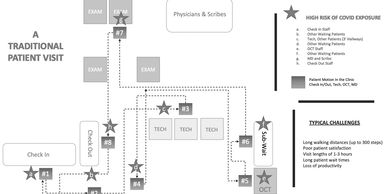
Now or in the future, organizations may have emerging needs — physician and staff training, patient flow or facility redesign, or deeper data analysis. Below are examples of that work, and the results it's produced.